Make A Chocolate Prompt Reading Tips
Parse every chocolate duel prompt so the AI judge recognizes your plate on the first glance.
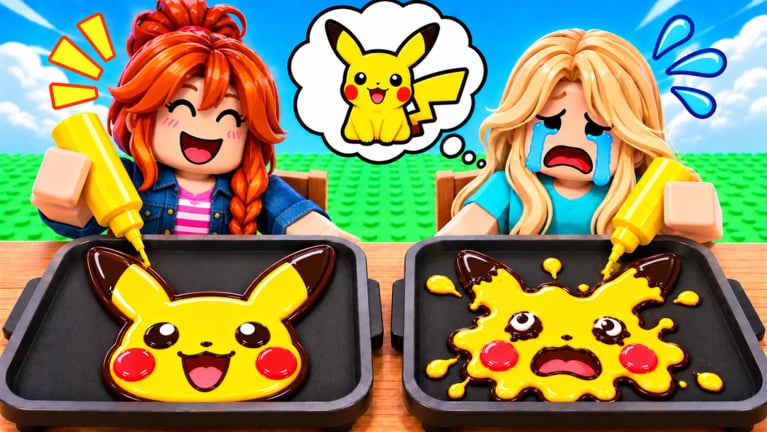
In Make A Chocolate, the match is decided by an AI accuracy percentage—not by who looked busier on the plate. Both players receive the same creative prompt, sculpt chocolate art, and compare scores. Most avoidable losses start before the first tool stroke: a misread noun, a skipped color, or a clever reinterpretation that the judge never rewards. This page is a deep prompt-parsing drill you can run in the lobby and between duels.
Pair it with How to Win for timer and silhouette habits, Scoring Tips for in-match triage, and Strategies for ranked approaches. New players should still clear Getting Started and Controls so the tools keep up with the brief.
The five-second parse
When the prompt appears, do not sculpt yet. Spend a few deliberate seconds locking a one-line brief.
- Core noun — What object, animal, food, or character must appear?
- Count — Singular or plural? Two ears is not the same as a pile of ears.
- Modifiers — Size, age, emotion, material, or style words (tiny, giant, melting, fancy).
- Color cues — Even on a chocolate plate, prompts may name colors or contrasts you should imply with shape or fill tools.
- Pose / orientation — Sitting, flying, stacked, sideways, open versus closed.
Say the brief silently: “one tall rabbit, long ears, sitting.” If you cannot say it in one breath, you have not finished reading.
Nouns first, ego second
Players lose accuracy when they invent a scene the prompt never asked for. A beautiful chocolate garden around a mug still loses to a plain, centered mug if the prompt was simply “mug.” The AI is scoring match to the request, not artistic ambition.
Protect the noun:
- Center the subject on the plate when possible.
- Make the noun’s silhouette readable from a half-second glance.
- Add props only when the prompt names them or when a single prop clarifies identity (a handle on a cup, a stem on a cherry).
If time remains after identity features, then decorate. Decoration never rescue a wrong noun.
Modifiers that change the build
Modifiers are where careful readers pull ahead of fast scribblers.
- Size words change massing. “Tiny” means leave negative space; “giant” means fill the plate with one connected mass.
- State words (broken, melted, frozen, shiny) suggest silhouette breaks or smooth flows rather than extra clutter.
- Emotion or expression belongs on the face or posture, not as random spikes everywhere.
- Style words (cartoon, simple, fancy) tell you how many identity details to attempt before cleanup.
When two modifiers conflict under time pressure, keep the noun and the single modifier you can finish cleanly.
Counts and multiples
Count errors are silent killers. “Three cookies” scored as one giant cookie often underperforms a simpler trio of clear rounds. Practical rules:
- If the count is small (two to four), block separate masses early.
- If the count is large, imply a group with repeated shapes rather than perfect individuality.
- Do not merge multiples into one blob unless the prompt allows a “pile” or “stack.”
Re-read the number after your block-in. Many players sculpt the right subject and still miss “pair” or “double.”
Colors and chocolate constraints
You are working in a chocolate art fantasy, so literal paint-accurate color may be limited. Still treat color words as identity signals:
- Use fill, height, or tool contrast to show a named color region when the kit allows.
- If the palette is mostly chocolate browns, exaggerate shape differences the color word was trying to highlight (stripes, spots, layered toppings).
- Never ignore a color cue just because the medium is chocolate—show you read it.
Poses and orientation
Pose words decide limb placement and camera-facing shape.
- “Sitting” versus “standing” changes leg mass and height.
- “Side view” versus front-facing changes ear and snout layout for animals.
- “Open” boxes, books, or mouths need a visible gap; closed shapes read as a different object.
If pose and detail fight the clock, lock pose in Phase A and leave texture behind. A correctly posed simple animal beats a detailed animal in the wrong stance.
Common misreads
Near-homophones and short words. Bar versus bear, ship versus sheep, bat versus hat—pause on short nouns.
Category swaps. Food prompts sculpted as animals, or toys sculpted as real creatures, tank accuracy even if the craft looks nice.
Over-clever metaphors. Interpreting “cold shoulder” as abstract art usually loses to a literal readable shoulder shape if that is what the prompt supports. Save cleverness for when the literal read is impossible to finish.
Ignoring “with” clauses. “Cat with a hat” is two identity pieces. Build the cat first, then the hat as a clear second mass.
Decorating the wrong subject. Spending the timer on a fancy plate rim while the noun is vague is a self-inflicted loss.
Literal versus clever interpretations
Default to literal. The AI judge is built around accuracy to the prompt text. Clever pivots only make sense when:
- The literal object is ambiguous and two readings are equally supported, and
- Your clever reading is still obviously tied to the prompt words, and
- You can finish it inside the timer with a clean silhouette.
If any of those fail, stay literal. Consistency across matches farms more money than highlight-reel gambles.
Category drills
Practice these offline or during lobby waits.
Animals — List head, body, and one unique feature (ears, trunk, shell). Ask: would a stranger name this animal from the outline alone?
Food — Separate stacked layers early (burger, cake, sundae). Keep toppings as secondary masses so they do not erase the base shape.
Objects — Prioritize the function cue: handle, spout, screen, wheel, lid. Function cues beat ornamental patterns.
Run three imaginary prompts per category before a serious farming block. The goal is faster parsing, not prettier daydreams.
Practice between matches
- Recite the five-second parse checklist until it is automatic.
- After each duel, write one missed word from the prompt (mentally is fine).
- Compare both AI percentages: did the winner look more literal, more centered, or simpler?
- On loss streaks, shrink ambition—noun plus one modifier only—until accuracy stabilizes.
- Use Strategies to pick a default playbook, then return here when prompts feel wordier after updates.
Linking prompt skill to the rest of the loop
Better reads raise win rate, which raises match money for Cosmetics and reduces the urge to panic-buy multipliers on Game Passes. Farming structure belongs on Earn Money. Keep plates appropriate: inappropriate art can mean a permanent ban no matter how perfectly you parsed the noun.
Pre-sculpt card
- Noun locked
- Count checked
- Modifiers ranked (keep what you can finish)
- Color or contrast plan noted
- Pose chosen
- One-line brief spoken
- Then—and only then—touch the plate
Master that card and your average accuracy climbs. Higher averages beat lucky sculptures. For the wider tutorial map, return to the Guides Hub and keep sharpening with Scoring Tips after every session.
Frequently Asked Questions
Quick answers for Make A Chocolate players.
What should I read first in a Make A Chocolate prompt?
Lock the core noun and any count, then rank modifiers, color cues, and pose words into a one-line brief before you sculpt.
Is a clever interpretation better than a literal one?
Usually no. Default to a literal, finishable silhouette. Clever reads only help when they still match the prompt words and fit the timer.
How do I practice prompt reading between matches?
Run animal, food, and object drills in the lobby: invent a prompt, list identity features, and time a mental Phase A block-in.
Do color words matter on a chocolate plate?
Yes. Treat them as identity signals. Use fill, contrast, or shape separation to show you read the cue even when the medium is mostly chocolate.
Where do I go after I improve at reading prompts?
Apply the reads with How to Win and Scoring Tips, then farm with Earn Money.